
Operation Reading Snowball and the “Each One Teach One” Literacy Method
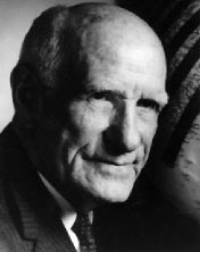
Dr. Frank Laubach, the man behind the
Each One Teach One Method
by Meg Rayborn Dawson, author of the Dyslexic No More: Saved by the ABC’s
It’s no secret that our country suffers from a low literacy rate. This isn’t good. It limits us — both individually and nationally — and it needs to be changed.
Operation Reading Snowball is based on the “Each One Teach One” model for the social development of literacy, This method was developed by the missionary Frank Laubach, who created alphabets for hundreds of people groups around the world, and used these personalized alphabets to teach people how to read and write in their own languages. (See our blogpost: A Convicted Murderer, a Columbia Grad, and a Missionary — The Frank Laubach Story).
Laubach also created literature, using the alphabets he created. New readers were able to read their own people’s traditional lore and histories which, until then, had only been passed down by mouth.
Finally, Laubach encouraged the people to teach others to read, and people, who had barely learned to read, began teaching their friends and family members.
We at Reading Snowball hope to follow in the Laubach tradition, by introducing our English alphabet to those who speak English but can’t read English.
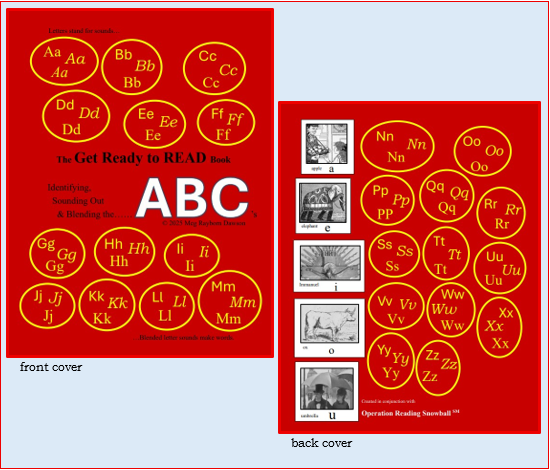
With this purpose in mind we’ve added a new Alpha-Phonics resource titled, The Get Ready to Read Book: Identifying, Sounding Out and Blending the ABC’s.
The Get Ready to Read Book: Phonemic Awareness Readiness
This preparatory reading book contains Letter Sound Charts, Decoding Puzzles, Enunciation Drills (using short vowel sounds), and Beginning Word Lists. Pre-School Students (as well as students of all ages, who have been unsuccessful at learning to read at school) can use this book to learn to distinguish between letter names and letter sounds, and for learning to blend the sounds into simple words. Plenty of drills are provided for practicing these skills and solidifying them in their brains.
After completing this reading-readiness (phonemic awareness) course, the learner is ready to start using Samuel Blumenfeld’s Alpha-Phonics: A Primer for Beginning Readers, which takes a student all the way through the various letter sounds, or letter-combination sounds, while simultaneously introducing simple sentences. After mastering the Blumenfeld course, students are ready to begin reading independently, and their ability to read continues to grow through practice.
Getting the Snowballs Rolling: How to Begin Teaching
I’m certain there are many among us who’d like to play a part in the war against illiteracy, and here is how it can be won, one reader at a time. If you wish to join the “operation”, begin with your first student.
If the student is young and hasn’t begun any other sort of reading instruction, then the Original 1983 Alpha-Phonics edition will be sufficient.
For students who already struggle with reading and have not been exposed to systematic phonics instruction, The Get Ready to Read Book will help them develop some decoding skills before starting Alpha-Phonics. (This is necessary because the brain needs to be trained to use the area where decoding, rather than picture recognition, is used.)
Where to Begin…
Choosing Between The 1983 Classic Alpha-Phonics & Alpha-Phonics PLUS (Blumenfeld/Dawson Edition)
For over 40 years our customers, mostly homeschoolers, have been more than satisfied with the original 1983 edition of Alpha-Phonics: A Primer for Beginning Readers. (Click here to read our REVIEWS)
As a reading tutor, I used the original 1983 edition for over 25 years. Then I began teaching late learners, many of whom had been told they would never be able to read. When I taught these students, I discovered that many of them needed more drills before beginning the course (due to experiences related to not being able to learn to read), and I simply wrote out drills for them.
Ultimately, I took what I learned from this experience and created pre-reading exercises which I added to the Original 1983 book, and titled it Alpha-Phonics PLUS. This book can be used with all readers, but many of the drills will not be needed by all readers. It has been designed for the classroom, where there may be a range in the ability of learners. The Alpha-Phonics PLUS Supplement also comes in a student version which doesn’t include Samuel Blumenfeld’s original teacher’s manual.
The Get Ready to Read Book provides phonemic awareness exercises such as the Letter Sound Charts, the Decoding Puzzles, Enunciation Drills (using the short vowel sounds). The simplest sounds are introduced here in the interest of developing decoding skills without too much additional information. By the time students have completed The Get Ready to Read Book, they will be prepared to begin using the Blumenfeld Alpha-Phonics book.
Both books include clear, easy-to-understand instructions, and 100’s of thousands of parents, over the years, have been successful with little additional help.
Questions about using the books can be emailed to us on this website. We’ll answer them as quickly as possible.

After you Teach Your First Student, then what?
First, PAT YOURSELF on the BACK.
Then receive your SURPRISE!
Here’s the deal. I want to be able to collect data on the numbers of people who learn to read through our program, and I want to learn about their experiences.
In order to do this, I’ll send a free copy of The Get Ready to Read Book to anyone who has completed Alpha-Phonics: A Primer for Beginning Readers.
My hope is that these new readers, or their teachers, will find friends or family members, and get them started on the course to reading. After the new students complete The Get Ready to Read Book, they will be ready to start Alpha-Phonics.
Once students complete Alpha-Phonics, I only ask that they, and or their teachers, write me a letter. Tell me that you completed Alpha-Phonics, and I’ll rejoice with you! Address your envelope to Operation Reading Snowball; P.O. Box 503; Wilder, ID 83676.
So now, what are you waiting for. Let’s get started!