* Editorials * Editorials * Editorials *
The End of Reading
IS NOT Here
An Editorial Response to a Doomsday Article published in The Atlantic (August 2026)
In August 2026, The Atlantic magazine came out with a doomsday report in their article, The End of Reading Is Here. The article was well researched and treated the topic of literacy as a history of cultural trends. This approach allowed the author to persuade readers toward the idea that we are simply entering a postliterate era – as though the decline of reading were an inevitable consequence of societal evolution. The prevailing trend, driven by smartphone users perpetually distracted by notifications, short-form text, and digital noise, is presented as an inescapable reality.
Why not accept it? This is where we are. Literacy is dead. Compromises and compensations are proposed as if this trend marks the encroaching death of reading.
I argue to the contrary, and I see hope in a very different trend.
We should not focus on an impending end. Instead, we must ask a fundamental question, “How can we revive this lost art of reading?”
The answer does not lie in passively accepting digital distraction as an inevitable cultural fate, but in addressing a foundational flaw in how we’ve taught reading for generations. What The Atlantic frames as a permanent post-literate shift is aftermath of a decades-long instructional failure. Millions of readers have not abandoned deep reading simply because of trends in digital media; they were systematically deprived of the neural tools required to read fluently in the first place.
Rebuilding the Reading Brain
Neuroscience has proven that unlike vision or speech, the visual circuit for reading must be deliberately built. Neuro-Scientist Dr. Stanislas Dehaene’s brain-imaging research (Reading in the Brain: The Science and Evolution of a Human Invention, 2009) shows that learning to read requires the building of neural-networks from bottom up, starting with learning to blend the most basic letter sounds, and then building onto those networks as more complex sounds are learned.
This neural circuit is constructed in only one way: through explicit, systematic phonics that directly connect letters (graphemes) to their corresponding speech sounds (phonemes). When a child is taught through systematic phonics, word recognition moves from slow, conscious effort to instant, subconscious automation.
By aligning how we teach reading with how the human brain learns, we aren't facing the death of literacy—we are on the cusp of its greatest restoration. Dehaene’s work clearly explains the purpose and necessity of phonics-based reading instruction. Phonics is not an obstacle to rich literature or critical thinking; it’s the absolute prerequisite for it.
A Grassroots Revival
I anticipate a reading revival, but it will require effort from all of us. We need to actively return to systematic instruction, and the science of reading shows us exactly how to do that. When a reader transitions from “struggling to decode” to “fluent, automatic recognition”, reading ceases to be a chore and becomes a gateway to wonder, empathy, and deep intellectual independence.
It’s our national duty to begin teaching reading again, within our homes, schools, civic centers, and churches. The only way to do this successfully is to return to an alphabetic approach, as Samuel L. Blumenfeld explains in the teacher’s manual contained within the classic 1983 version of Alpha-Phonics: A Primer for Beginning Readers, and in the Alpha-Phonics PLUS Teacher Copy (with additional phonemic awareness exercises):
“The English alphabetic system may be complex, but it can be taught, and it ought to be taught. We have an alphabetic system of great range and flexibility. Our spellings reveal much about the history and development of our language, and once the eccentricities of the system are learned, they are learned. They do not change. The reward for learning the system is to have for one’s personal use and enrichment the entire body of our published literature. Such a literary treasure is indeed the priceless inheritance of everyone who can read.”
Finally, I wish to encourage Americans to begin teaching their children to read again, and anyone else they know who needs to learn, no matter what age. Let’s rebuild a society of literate people.
Still hopeful,
Meg Rayborn Dawson
Hope for a Return to Literacy
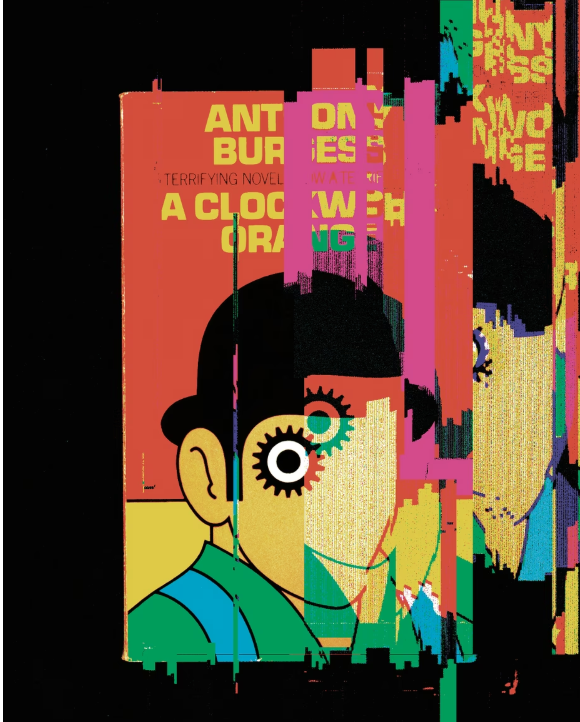
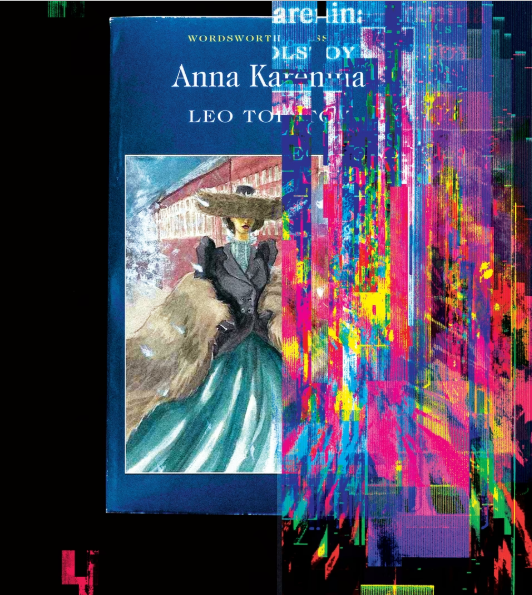
Bemoaning a postliterate world
Illustration from The Atlantic article. Source: Wordsworth Editions.